
In reading even a couple posts from this blog, you could probably guess that my Mom made a huge impact in my life for the good. But, as with all people, she was not perfect. An aspect of our relationship which I struggled with was believing that she accepted me as I was. If I look at the amount of time she chose to spend with me, the topics of her heart which she confided in me, and the amount of laughter we shared, then I know I was not only approved, but admired. But her praise of my strengths was not as much as my tender heart required. She tended to bring up matters that I needed to fix rather than where I excelled. As a result, I often felt like I was fighting for her approval.
I remember one incident in particular during my mid-twenties where my Mom mentioned that my weight was getting out of control. I know where her heart was coming from. She wanted to see her daughter live a healthy life. She was a health-conscious woman herself and wanted to see those same values acted upon in my life. Plus, she’s my Mom. Moms don’t stop worrying about their kids at a certain age. That love and concern is never-ending. I already know this to be fact even though my eldest is only seven years-old. Despite logically understanding where she was coming from, her words broke my heart. All I heard was that I was fat and, therefore, unlovable and unapproved. It’s not a rationale thought process but, sadly, it’s my default thought-process. It was not the first time she brought up her concern about my weight, but it was the first time I responded with my true feelings. I explained to her that when she continually reminds me of my weight issues, it just makes me want to eat more. Again, not a logical nor healthy thought process.
Around this same time, I heard this talk given by Jeffrey R. Holland, an American educator and religious leader, that stuck with me. His words are as follows:
We must be so careful in speaking to a child. What we say or don’t say, how we say it and when is so very, very important in shaping a child’s view of himself or herself…Be constructive in your comments to a child—always. Never tell them, even in whimsy, that they are fat or dumb or lazy or homely. You would never do that maliciously, but they remember and may struggle for years trying to forget—and to forgive. And try not to compare your children, even if you think you are skillful at it. You may say most positively that “Susan is pretty and Sandra is bright,” but all Susan will remember is that she isn’t bright and Sandra that she isn’t pretty. Praise each child individually for what that child is, and help him or her escape our culture’s obsession with comparing, competing, and never feeling we are “enough.”
With my own childhood struggles and these words always remaining in the back of my head, I strive to find the best way to magnify my children’s strengths and lovingly encourage them in matters that they need assistance. But I’m at a loss.
Each of my girls feels like the other one does “everything” better. Vivian wants to draw and sing like Abby and Abby wants to run and get in less trouble like Vivian. I’ll admit, I haven’t quite figured out how to support and nourish my girl’s accomplishments and strengths without the other one feeling down for not receiving the same remarks. It’s difficult to accept, embrace, and improve upon our own strengths rather than long for, struggle, and try to catch-up to other’s strengths. I’m only now learning how to be OK with competing with myself versus others. Now I have to figure out how to instill that way of thinking in my children. I suppose, as Holland suggests, the key is in praising them individually.
But where I normally would be giving you my two cents and more, I would really appreciate hearing about experiences you’ve had that have helped you nurture your strengths and work on your weaknesses. Is there a healthy way to share with a loved one a concern you have about their actions or behavior? I’ve often wondered if there was a way that my Mom could have addressed my weight that would have inspired me to act instead of react.

I think one of the things that I have learned and shared with my children is that if one person is blessed with a talent it does not mean that you are not blessed with the ability to perform that same talent. My daughter Abby has a naturally beautiful singing voice, but that doesn’t mean that Vivian cannot be a singer. I’ll be straight with you, Viv’s voice is way out of tune, but she sings with so much heart that as long as she puts her mind in to practicing, then she’ll reach her goal. I suppose the same goes for my husband and I. He is a natural in the kitchen. He can randomly put stuff together and it tastes delish. He is the cook in our home. But just because he is a good cook doesn’t automatically mean I’m a bad cook. I think that’s where my daughters, and I, struggle in understanding our strengths. Our default settings tell us that if it’s not our strength then it’s our weakness. It’s that black and white thinking that made me want to eat more burgers when my Mom brought up my weight. If I couldn’t please her by being fit, then I would relish in gaining weight. I would show her! But what was I really showing her? Nothing but spite and stubbornness.
So, dear readers, enlighten me. Share with me your “A-Ha Moments” that helped you to believe in yourself and/or raise a generation that does the same.
 Series, Catching Fire, but I liken SoCal to The Capitol and Central Oregon to District 12. For those who have read the series, I realize this is an extreme analogy. For those that have not read the series or seen the movies, the basic idea is that The Capitol is an assault on your senses, unless you live there and know no different. Everything is over the top in The Capitol, particularly the fashion scene and gluttony.






 when she is confessing to her husband that she fantasizes more about being alone than leaving him for another man, “There are times when, on my worst day, I’ve thought about just leaving our house and going someplace, like checking into a hotel. Being in a room all by myself, in a quiet, air-conditioned room, sitting down, eating my lunch, with no one touching me—drinking a diet Sprite, by myself.” Insert Dr. Pepper for Diet Sprite and she’s described what I long to do on days like yesterday.
 and this one line hit home, “if it weren’t for second chances, we’d all be alone.” How many second chances has my husband given me and I him, I wonder? These last few days have been a series of second chances.




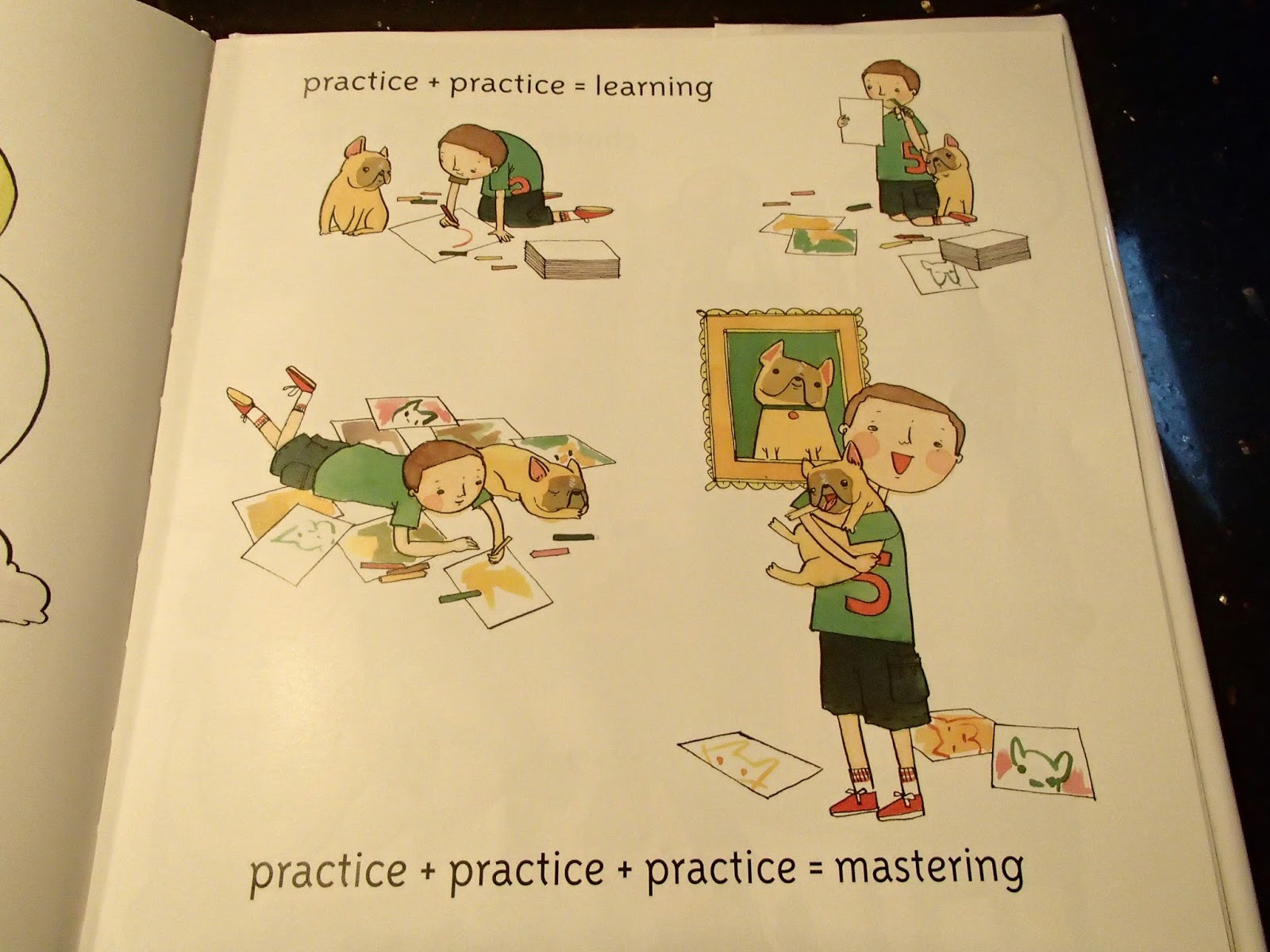
 . I loved the darling drawings and great message, but boy did it hit home when I saw these two pages:
 firstyoumustbegin.com